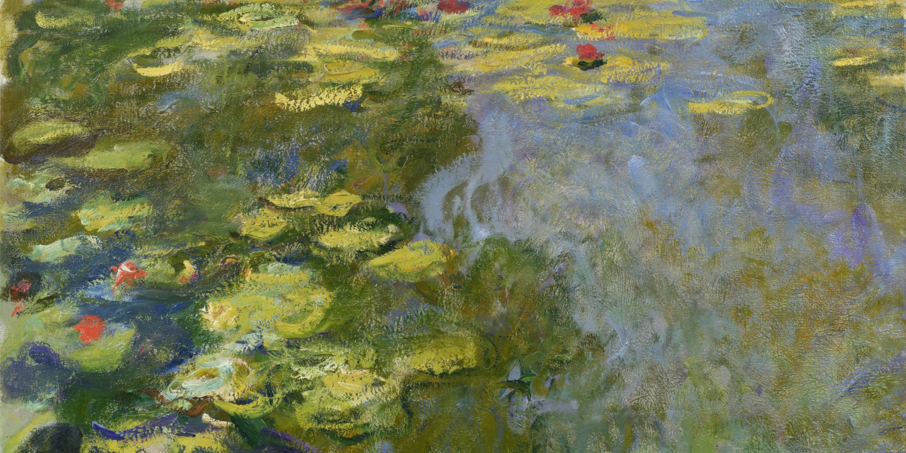
Organisée par la Maison Caillebotte, pour la Ville de Yerres, sous le commissariat de Valérie Dupont-Aignan, l’exposition «La nature n’est pas un décor» propose une traversée sensible et picturale du paysage.
L’exposition est née du désir de faire dialoguer des oeuvres de Claude Monet, à l'occasion du centenaire de sa disparition avec celles d'artistes contemporains, déjà liés à la Maison Caillebotte pour y avoir exposé et aimé le lieu. Tous partagent une même exigence, peindre au plus près de la sensation, révéler les forces invisibles à l’oeuvre dans la nature. Donner forme à ce qui échappe au regard immédiat.
De Claude Monet aux artistes contemporains, l’exposition réunit une soixantaine d’œuvres de : Jacques Truphémus, Markus Lüpertz, Érik Desmazières, Malgorzata Paszko, Evi Keller, Charlotte de Maupeou, Ronan Barrot, Youcef Korichi.
Un thème inscrit dans l’histoire du lieu
Présenter une exposition consacrée au paysage à la Maison Caillebotte s’impose naturellement. Au XIXe siècle, la propriété fut la résidence de la famille Caillebotte et le parc paysager devint l’atelier de plein air de Gustave. Son ami proche Claude Monet fréquenta également les lieux et s’en inspira, quelques années plus tard à Giverny, pour imaginer son célèbre bassin d’eau et sa passerelle.
Le domaine lui-même constitue un paysage. Le parc, dessiné « à l’anglaise » en 1824 après l’acquisition de la propriété par Pierre-Frédéric Borrel, fut conçu comme une promenade ponctuée de fabriques ornementales. Dans l’esprit romantique du début du XIXe siècle, la nature y est idéalisée et mise en scène : vallons, rocailles et perspectives composent un paysage pittoresque animé par la présence de la rivière.
Monet et les artistes contemporains : un dialogue
Assis au bord du bassin de son jardin à Giverny, Claude Monet découvre ce qui deviendra l’une des révolutions majeures de la peinture : le miracle des Nymphéas. Dans sa quête incessante de la lumière, il dissout progressivement les frontières de l’espace pictural. La peinture n’est plus une « fenêtre » ouverte sur une scène, mais un espace immersif dans lequel le spectateur est invité à entrer.
La peinture ne cherche plus à représenter le monde, mais à en restituer la vibration, la matière et la lumière. Par ce geste radical, Monet ouvre la voie à la peinture moderne et élargit considérablement le champ des possibles.
À travers une soixantaine d’œuvres, le parcours de l’exposition se déploie en neuf salles, chacune consacrée à un artiste contemporain répondant à sa manière aux questions ouvertes par Monet.
Le paysage y est entendu dans un sens large : il englobe campagnes, jardins et espaces naturels, sans exclure le paysage urbain.
Dialoguent avec les Nymphéas de Monet les profondeurs telluriques d’Evi Keller, l’intimité lumineuse de Jacques Truphémus, la mémoire et la forme chez Markus Lüpertz, les atmosphères suspendues de Malgorzata Paszko, l’hyper-perception de Youcef Korichi, les paysages gravés d’Érik Desmazières, la puissance de la couleur chez Charlotte de Maupeou ou encore la densité picturale de Ronan Barrot.
Sans filiation stylistique apparente, ces œuvres se répondent pourtant. Toutes partagent avec Monet une même liberté face à la nature et à sa représentation.